For Justin Levitt, one of the Constitution’s most important ideas appears in its opening words: the aspiration to form “a more perfect union."
By Diane Krieger
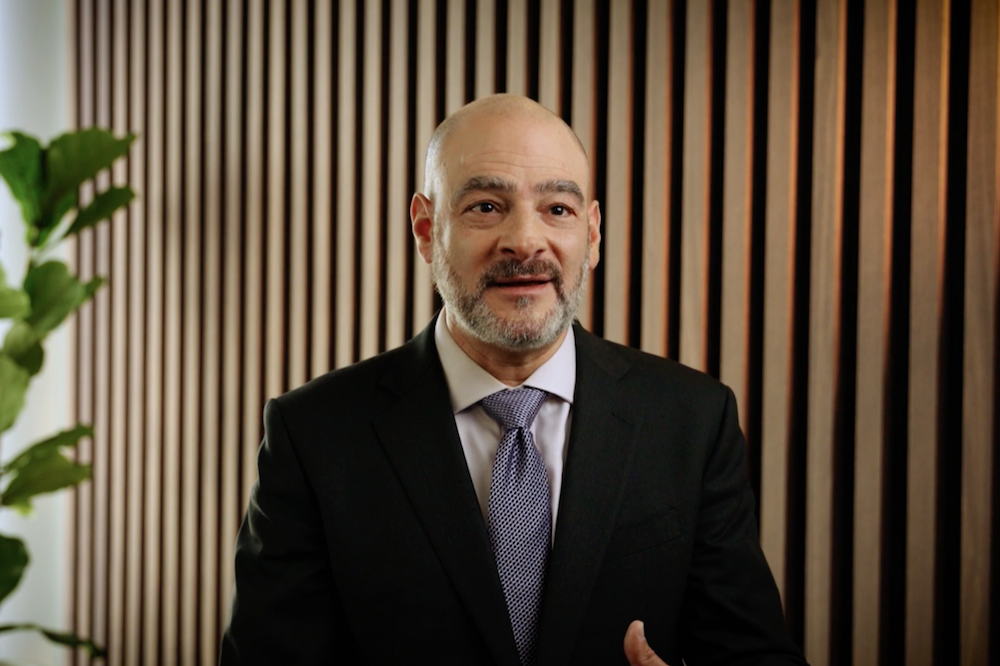
Watch Professor Levitt's Featured Insights video
To Professor Justin Levitt, the U.S. Constitution’s insight starts right at the top, with the goal in the first sentence of the preamble: “a more perfect union.”
Nota bene: It doesn’t say “a perfect union.”
“This is a profoundly inspired choice of phrase – the North Star in the owner’s manual for the country,” says Levitt, the Gerald T. McLaughlin Fellow at LMU Loyola Law School (LLS). “The challenge is to keep getting better, even as we realize that perfect is unattainable. It’s right there in the founding document.”
A self-described practical idealist, Levitt, 52, retains an optimist’s zeal for the American experiment, fundamentally believing that “we have the capacity for better. We are better now than we were 40 years ago, 80 years ago, 160 years ago. And we will keep getting better if we trust ourselves,” he says.
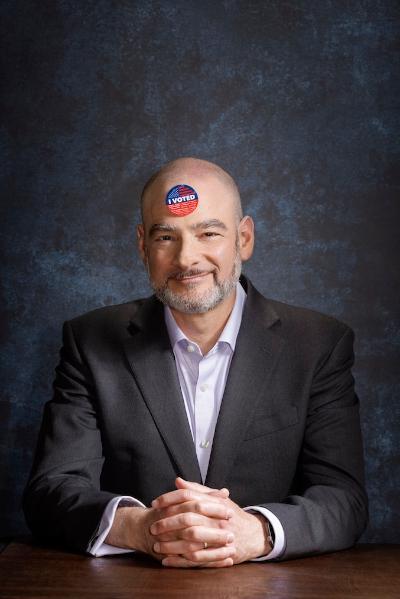
For Levitt, the road to election-law scholarship was roundabout.
A math-science geek from Bridgewater, N.J., he entered Harvard expecting to be an engineer. He ended up building his own major in visual propaganda studies. Two years at McKinsey taught him a bit about the business world. He took the LSAT on a bet with his father, an insurance defense lawyer.
A Harvard JD/MPA and a clerkship with Judge Stephen Reinhardt, on the U.S. Court of Appeals for the Ninth Circuit, followed. Curious how presidential races worked, Levitt joined Gen. Wesley Clark’s short-lived 2004 campaign.
“I held 17 jobs in three or four months,” Levitt recalls. “There was no better way to see all parts of the campaign.”
Later that cycle, as in-house counsel to the Washington, D.C.-based voter-mobilization group America Coming Together, Levitt found his calling.
For Levitt, the draw to election law isn't for a single reason but the way three come together: the impact of shaping the foundation on which every policy rests; the intellectual challenge of improving a system full of hard tradeoffs; and the emotional resonance of a process that tells people they belong.
“Elections are one vital way we communicate belonging,” he says. “When someone is unjustly excluded – or included for the first time – there’s a gift in understanding how very much it matters to their sense of community.”
He spent the next five years as counsel in the democracy program of NYU’s Brennan Center for Justice, with a hiatus running voter protection for Barack Obama’s 2008 campaign.
Levitt joined the LLS faculty as an associate professor in 2010 and hasn’t budged. He’s been on extended loan to the federal government twice: as deputy assistant attorney general in the Justice Department’s Civil Rights Division under Vanita Gupta and Loretta Lynch (2015-17); and as the White House’s first senior policy advisor for Democracy and Voting Rights (2021-22).
Both appointments saw Levitt making strides toward a more perfect union.
It was the civil rights team he supported at DOJ that won the landmark N.C. State Conference of the NAACP v. McCrory appeal, overturning North Carolina’s discriminatory 2013 election law. At the White House, Levitt helped secure passage of the bipartisan Electoral Count Reform Act that addressed many of the conditions responsible for Jan. 6, including a misreading of an 1845 presidential-electors statute that Levitt himself exposed in a 2021 NYU Law Review article.
“Elections are one vital way we communicate belonging."
The White House stint got Levitt thinking about the concept of “High Fructose Democracy,” the working title of his first book project. The metaphor draws parallels between America’s unhealthy sweet tooth and its appetite for political candy.
The thrust of his argument: “We’re consuming democracy with way too much sugar, and it’s just empty calories. Most Americans tune in to the democratic process in October of a presidential year. They fixate on celebrities. And they call this citizenship.”
“Shallow politics,” he warns, won’t end when Donald Trump leaves office. Just as trauma care can’t fix our public health problems, he argues, the courts can’t fix our democracy. Likening election-rules fights to visiting the emergency room, he says “we’re never going to get out of those triage battles unless we also aim upstream.”
A healthy democracy starts with face-to-face interactions with each other, and with the local government that serves us directly. Levitt’s advice to every American voter: Read your hometown newspaper (and support it so it continues to exist), volunteer on a local project, learn who sits on your school board, and get to know the resources your city council makes available.
He hopes to finish “High Fructose Democracy” in summer 2027.
Ensuring “People” Remain in “We the People”
Over time, Levitt has produced reams of legal scholarship, including the chapter on the census in the “Oxford Handbook of American Election Law” (2024). His most recent major journal article marks the 25th anniversary of Bush v. Gore. In “The Misshapen Shadows of the 2000 Election” (Florida State University Law Review, forthcoming), Levitt systematically debunks three stubborn myths about the national electoral trauma: that the problem was butterfly ballots; that the courts went haywire; and that it’s normal for the judicial branch to decide elections. “People decide elections,” Levitt insists. “It’s profoundly dangerous to give up that agency.”
Another recent article, forthcoming in UCLA’s online law review, seeks to avert a coming storm in election law. In February, federal agents in Fulton County, Georgia, executed what Levitt believes is the first-ever federal warrant for election records. Shortly thereafter, the Riverside County sheriff seized ballots from California’s Prop. 50 election. Levitt’s article, co-written with Georgetown University’s John Keller, exposes a looming threat: How would the Constitution treat a request for a warrant while election results are still pending? The essay argues that just as some searches or seizures are reasonable even without probable cause, some searches are unreasonable even with probable cause. The message, aimed at judges asked to approve warrants: Federal law demands caution when it comes to seizing ballots. A recent article in Lawfare reframes the issues for the broader legal community.
In “A Spoonful of Sugar,” forthcoming in the latest Loyola of Los Angeles Law Review, Levitt once again addresses partisan gerrymandering. He has watched this “race to the bottom” for years. A 2007 Georgetown Law Review article he co-authored has gained new urgency as Texas, California, and five other states adopted mid-decade redistricting for short-term electoral gain (with a few other close calls). Since 2011, Levitt has laboriously tracked every state district map and related lawsuit on his website All About Redistricting, a go-to resource popular with academics and journalists.
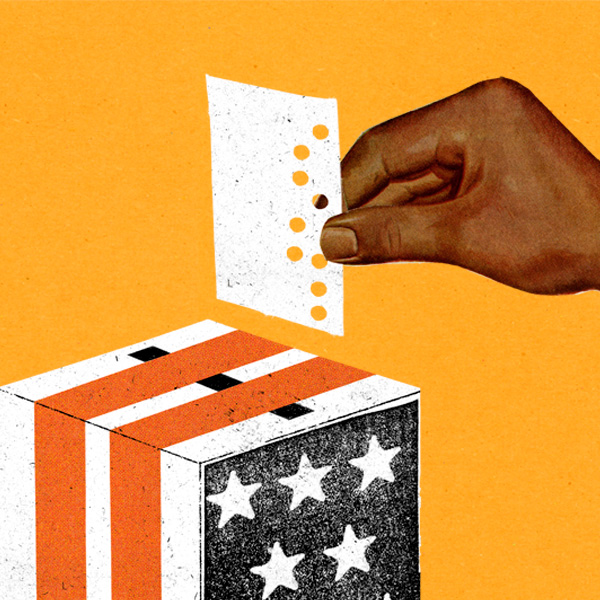
Getting Up Close and Personal with Democracy
Levitt has testified before Congress and state legislatures dozens of times, but his favorite speaking venue remains the classroom. He fancies himself more a facilitator than an authority figure, which may explain why he has won the Excellence in Teaching Award from Loyola’s Student Bar Association three times — most recently in 2023-24.
Part of Levitt’s allure is bringing the real world into the classroom – and, sometimes, bringing the classroom into the real world. On Tuesday, Nov. 3, LLS continues its tradition of canceling classes on Election Day to facilitate student service — a policy spearheaded by Levitt in 2018, and the longest-running such policy in the country. The LLS Votes project dispatches law students to L.A. County’s hardest-to-staff precincts as trained pollworkers. More than 200 signed up last cycle, and Levitt says, “we’re going to crush that participation level this time.” Loyola students, a third of whom are first-generation and many multilingual, also staff election-protection hotlines and help make sure other eligible students are registered to vote.
Levitt bridges the classroom-real world gap in other ways. In 2013, he pioneered the Practitioner Moot Program, which continues to provide free appellate moots to litigators with cases headed to state and federal appellate courts around the country – but with a natural emphasis on California. The service, invaluable to small-firm lawyers with limited resources, grew out of Levitt’s realization that LLS had more former Ninth Circuit clerks — himself included — on faculty than any other school in the nation.
Taken together, every project Levitt undertakes circles back to his ideas about forming “a more perfect union.”
“The job of a civil rights attorney,” he says, “isn’t to win the final fight. It’s to win today’s fight, so that we get to keep on fighting.”
Diane Krieger, a frequent contributor to LMU Magazine, is a Los Angeles-based freelance writer whose work has appeared in publications at USC, Tufts University, Johns Hopkins University, Caltech, and The Idaho Statesman, where she was the resident philharmonic and theater critic.