
Faculty Scholarship
LMU Loyola Law School faculty are moving the law forward with deep research and innovative ideas, within the academy and beyond.
Faculty Expertise by AreaRecent Highlights

Prof Matsumura Looks at How Law Marginalizes Families
Kaiponanea Matsumura recently published “The Illusion of Stability in Family Law” and “Asian Americans and the Harm of Exceptionalized Inclusion” in the Vanderbilt and Cornell flagship law reviews and an article in the peer-reviewed Social Issues and Policy Review that provides a research and policy guide for psychologists studying consensual non-monogamy. He is currently working on chapters for "Race, Racism, and the Law" and the "Oxford Handbook on Families and the Law," as well as an article on the U.S. Army’s treatment of marriages between Japanese and non-Japanese people during World War II.

Prof Grossi Develops Dialogue on Procedural Due Process
Simona Grossi's scholarship focuses on civil procedure, constitutional law, and federal courts. She published three articles this year: one exposing misconceptions in the Supreme Court's §1983 jurisprudence, and two companion pieces in the UC Law Constitutional Quarterly on procedural due process and the First Amendment in equal protection and affirmative action. She is now working on an article on the "First Amendment and Executive Power," proposing a framework to guide courts in addressing executive actions that violate First Amendment rights, and on "Constitutional Conflict Resolution," a piece proposing a framework to balance competing constitutional powers and rights.
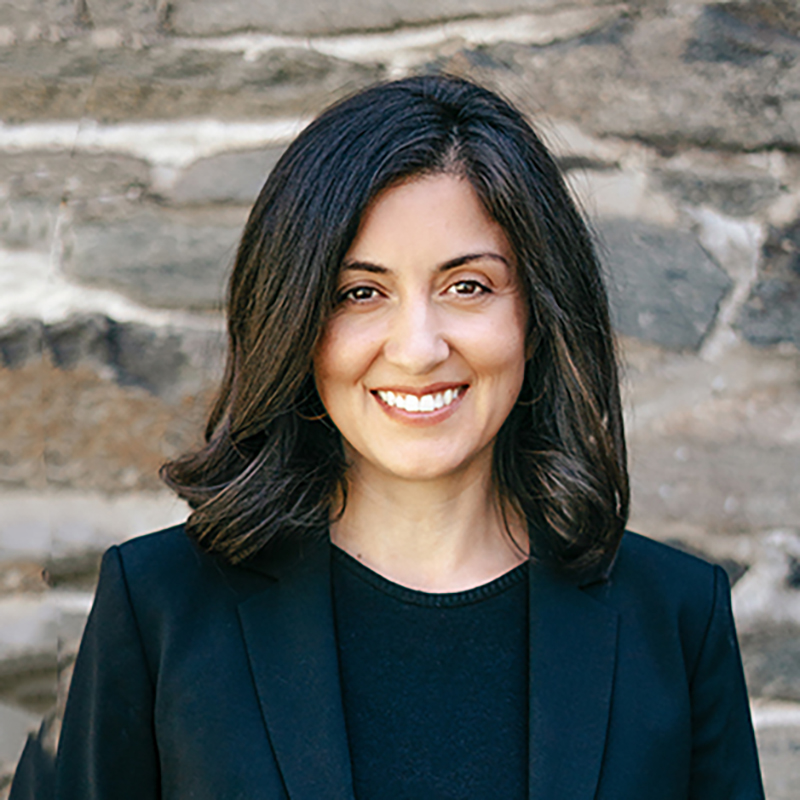
A Fresh Take on Mass Incarceration, Collective Reparations, and Civil Rights
Julia Mendoza's article “Healing the Land: Considering Collective Reparations” recently appeared in the UC Davis Law Review (2026), and “Resistance Rights” is forthcoming in the Minnesota Law Review (2027). She also recently published “The Language of Mass Incarceration and Organized Abandonment” in the Stanford Journal of Civil Rights & Civil Liberties. She is currently conducting research for two projects that focus on community organizers resisting the recent immigration raids by providing collective care for people in immigrant detention, and police violence in unincorporated areas such as East L.A.

Prof Delfino Examines Intersection of Generative AI, Deepfakes, and Law
Rebecca Delfino’s recent scholarship examines how generative AI and deepfakes are reshaping the legal system, with a focus on judicial ethics, evidentiary integrity, and access to justice. In spring 2025 she published “Pay-to-Play” in the Seton Hall Law Review, which builds on her earlier work on the deepfake defense. Her recent white paper, “Deepfakes on Trial 2.0,” was cited by the Advisory Committee on Evidence Rules at the U.S. Judicial Conference. Professor Delfino is authoring the chapter on "Deepfakes and Criminal Law" for "The Oxford Handbook on AI and Criminal Justice" (forthcoming 2026), and has in-progress article, “Artificial Authority: Judicial Disclosure, Old Values, and New Machines” addressing the judiciary’s use of generative AI in decision-making.

Prof Guttentag a Loud Voice for Federal Insider Trading Reform
Michael Guttentag’s most recent work calls for legislation to establish a comprehensive federal insider trading ban in the U.S. In a chapter published in 2025 in the "Research Handbook on Insider Trading," the John T. Gurash Fellow in Corporate Law & Business laid out the economic case for insider trading law reform. He also continues to explore ways legal rules can be used to simultaneously address inequality and enhance productivity, publishing in the Boston University Law Review and in the evolutionary psychology peer-reviewed publication, Evolution and Human Behavior.

Examining Governance Risks in AI Startups and Founder-Led Companies
Jennifer Fan’s recent scholarship examines emerging challenges in corporate governance within rapidly evolving technology sectors. In “Novel Corporate Governance Structures,” published in the Harvard Journal of Law & Technology, the Therese Maynard Chair in Business Law analyzes the innovative corporate governance models adopted by leading AI startups. In “Founder Worship, Effective Altruism, and Corporate Governance” in the Kentucky Law Journal, she uses Sam Bankman-Fried and FTX as a case study to illustrate how founder mythologies can undermine governance practices. Together, these works underscore Fan’s broader focus on the need for robust governance frameworks in fast-moving industries to safeguard legitimacy, accountability, and sustainable growth.