Kimberly West-Faulcon expresses concern the Supreme Court’s interpretation of the U.S. Constitution seems tied to an ideological agenda.
By Michael Blanding
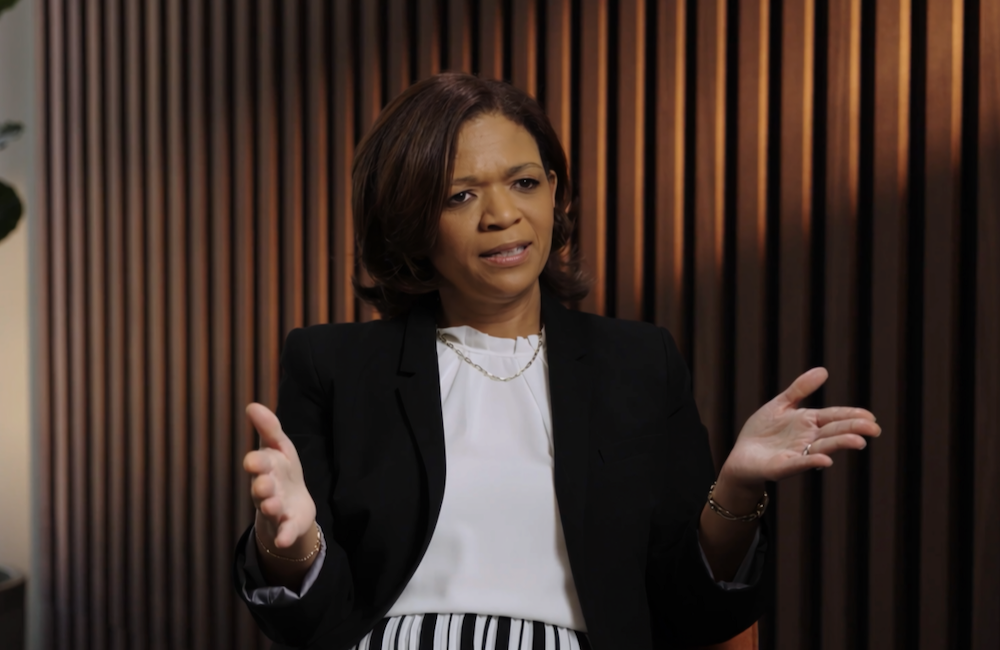
Watch Professor West-Faulcon's Featured Insights video
As the U.S. Supreme Court has given unprecedented power to the president of the United States, spurring “No Kings” protests across the country, LMU Loyola Law School (LLS) Professor Kimberly West-Faulcon is meeting the moment with her enduring expertise and scholarship.
In her Constitutional Law classes, West-Faulcon has long stressed the emphasis the founders put on fighting despotism. “In my view, the most important value of the U.S. Constitution is its commitment to anti-tyranny,” says West-Faulcon, James P. Bradley Chair in Constitutional Law. “Those who originally drafted the document — I call them the ‘powdered wig framers’ — were always thinking about the dangers of unchecked government power.”
Their worries went beyond the chief executive, West-Faulcon says, noting that Thomas Jefferson similarly feared the unchecked powers of the Supreme Court. “Tyrants don’t just come in the position of the presidency,” she says. “You can have tyrants in the judiciary.” West-Faulcon connects the Supreme Court’s power to protect us from tyranny to its ability to establish trust between the Supreme Court and the American people. “A lot of people in these times,” she says, “are not as trusting of the Supreme Court to protect their interests fairly.” That distrust has spread to questions about the Supreme Court’s ability to ensure fair elections, in her view. Concerns about the Supreme Court’s decisions gutting key provisions of the Voting Rights Act and permitting extreme partisan gerrymandering, West-Faulcon says, threaten the democratic principle “of making sure people have their voices heard.”
“In my view, the most important value of the U.S. Constitution is its commitment to anti-tyranny."
As she sees it, a Supreme Court that is distrusted by the people of our nation would be too weak to serve its central role as a constitutional “check” on presidential and legislative overreach. “If we come to believe the justices are following their own ideology and political desires rather than doing their jobs of interpreting the law of the U.S. Constitution, the risk is that the American people will lose the faith in the Supreme Court needed for the very delicate balance of our democracy to work.”
West-Faulcon came to academia after a decade-long career practicing constitutional law at the NAACP Legal Defense Fund (LDF), including six years as the LDF Western Regional director-counsel. There, she argued many important civil rights cases, becoming a national authority on the misuse of test scores in education.
As West-Faulcon was in the midst of litigating an antidiscrimination case against UC Berkeley, using the federal Title VI civil rights statute and the Equal Protection Clause of the 14th Amendment to challenge that university’s misuse and overreliance on college admissions tests such as the SAT and unscientific overcounting of Advanced Placement courses, the Supreme Court decided a case that eliminated private individuals’ right to sue for Title VI discrimination. “It narrowed the capacity to enforce a provision that was a key tool of civil rights,” says West-Faulcon. She decided then that she could have more impact as a scholar writing about the proper interpretation of the Constitution and educating the next generation of lawyers, joining the LLS faculty in 2005.

Anything but Original
West-Faulcon has long distinguished between the Supreme Court’s reliance on the 1970s theory of so-called “original intent” originalism, which decides cases based on what was literally “intended” by — in the minds of — the framers of the Constitution, and what she explains is the 1980s Justice Antonin Scalia-created theory called “original public meaning” originalism (OPM) that has completely overtaken the current high court. In her scholarship and teaching, West-Faulcon highlights the increasingly common criticism that the Supreme Court selectively applies OPM originalist interpretation. Her goal as a professor and scholar is to clarify that the current justices have not focused on the original intent of the framers, but instead on OPM, which is a confusing method of interpretation that gives the justices who use it virtual free rein to change long-established constitutional law doctrine. She argues that the OPM method, more than original intent, empowers judges to more easily hide the fact that judicial decisions may improperly implement an ideological agenda.
With the six-justice Republican-appointed majority on the court now often perceived as ceding power to the president, West-Faulcon is concerned that the Supreme Court is in an integrity crisis, with citizens increasingly skeptical of its ability to safeguard our freedoms.
“Not Colorblind” and Trojan Horses
In her recent scholarship examining what she describes as a “multi-decade effort” to influence the Supreme Court’s interpretation of the Constitution, West-Faulcon sees a barely hidden agenda to support “regressive” policy goals, including dismantling government power to enact gun regulations but expanding government power to regulate a pregnant person’s pre-viability abortion decision. Nowhere is that agenda more apparent than in the increasingly successful multi-decade effort to transform the court’s interpretation of the 13th, 14th, and 15th Amendments — the Constitution’s three “Reconstruction Amendments” — away from their purposes as drafted and ratified during America’s Reconstruction era, West-Faulcon believes.
“Those are the amendments that give us our fundamental due process rights and our equal protection rights to the dismantling of hierarchies,” she says, including hierarchies of race, biological sex, gender identity, and sexual orientation. In fact, West-Faulcon recently described “the various provisions of the 14th Amendment, particularly its citizenship, equal protection, and due process clauses” in a scholarly article she published just last year in the LLS student law journal, Loyola of Los Angeles Law Review, as “a constitutionalized DEI — diversity, equity, and inclusion — project.”
In an article also published last year in Northwestern University Law Review, West-Faulcon calls for progressives who embrace diversity, equity, and inclusion (DEI) to use the term “racialized” instead of “colorblind” to describe legal attacks on affirmative action and DEI. “It’s an inaccurate and highly problematic description of efforts to dismantle inclusion-motivated considerations of race to call them ‘colorblind’,” she says. West-Faulcon does not ask, and says she does not expect, the anti-DEI and anti-affirmative action forces who have successfully adopted the phrase “colorblind” to change the way they describe their five decades of promoting exclusionary interpretations of the Constitution. Instead, she identifies the audience of her piece titled “Not Colorblind” as the proponents of affirmative action and DEI.
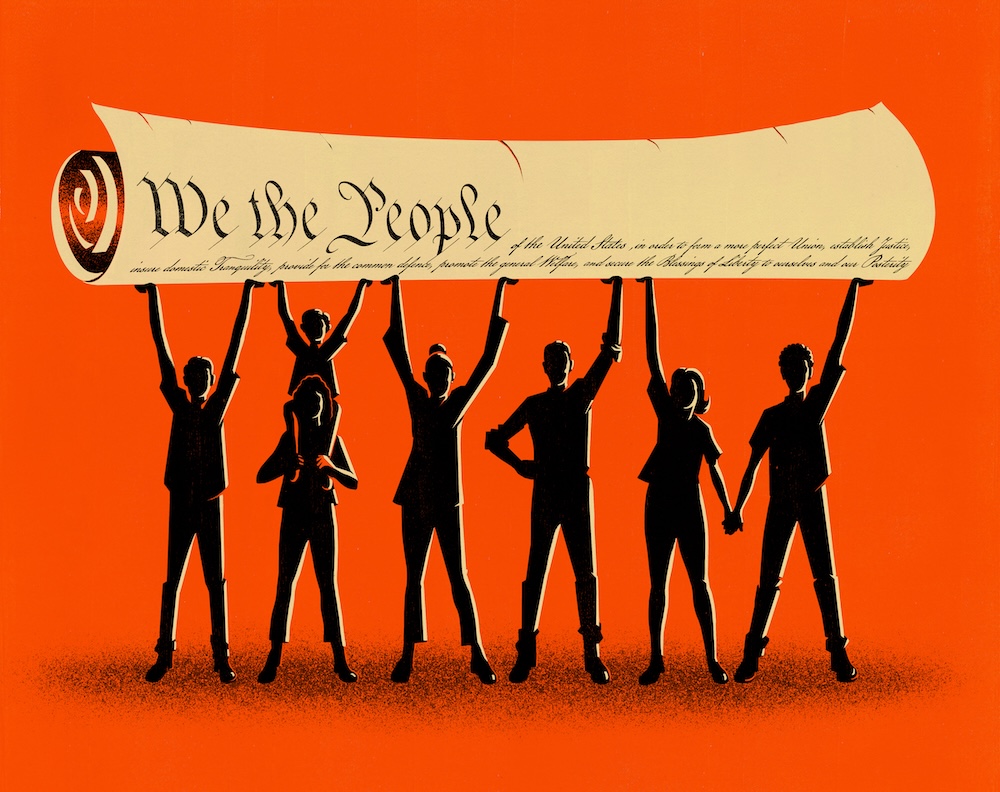
West-Faulcon says she hopes to elucidate the “doctrinal endgame” of those who file “Trojan horse” college admissions lawsuits like SFFA v. Harvard as “not colorblind.” Her aim is to illuminate the goal of those attacking DEI and affirmative action as selectively focused on eliminating only inclusion-motivated race-consciousness but to leave exclusion-motivated and policing-, border enforcing-, and incarceration-motivated race-consciousness doctrinally untouched. Her scholarly goal is to expose the contemporary legal project to destroy DEI as “racialized, not colorblind.”
In another article from 2024, she more extensively argues that anti-affirmative action lawsuits such as SFFA v. Harvard are nothing less than modern-day Trojan horses, deceptively hiding race-exclusionary ideology beneath the veneer “gift” of purporting such lawsuits will result in greater fairness in selective college admissions. She puts an even finer point on that concept in a paper published this year in the North Carolina Civil Rights Law Review, titled “White Predominance Is the Point,” drawing together multiple attacks on DEI as part of, what she describes as, an agenda to pervert civil rights law into a never-before-seen legal regime “that protects white predominance of America’s most coveted business funding and employment opportunities” based on what West-Faulcon says is “the falsehood that inclusion-motivated race awareness victimizes Whites.”
All of this animates West-Faulcon’s scholarship, which advocates for a proper understanding of the Constitution in a way that is accessible to the general public. “It’s important to not just have people in ivory towers knowing these things if we are going to help our nation accomplish the promises the Constitution is supposed to let us accomplish.”
In her role as a nationally recognized constitutional scholar, West-Faulcon regularly advises legal civil rights organizations and serves as a volunteer expert in private meetings with law firms litigating the nation’s highest-profile cases to push proper interpretation of constitutional doctrine. “I really am 10 toes down on the academy being the place from which I can make that difference,” she says. That includes the students she sends out every year from her courses, whom she hopes will take the message of freedom and anti-tyranny promised by the nation’s founding documents and spread it far and wide. “If we don’t have lawyers in our society who have a strong sense of constitutional law, we will be lost,” she says. “I believe there is something very valuable in sending out a generation of lawyers who have that capacity.”
Michael Blanding is a Boston-based investigative journalist whose work has appeared in The New York Times, WIRED, Smithsonian, Slate, The Nation, The Boston Globe Magazine, and Boston. His newest book, "The Gospel According to Hobby Lobby: Inside a Billionaire Family’s Quest to Craft a Christian Nation," was published by PublicAffairs in July.