Wyatt Gill Finds His Rhythm at Law and Music’s Intersection

For a long time, Wyatt Gill ’27 thought he’d be a rock star.
Growing up in Austin, Texas — known as the “Live Music Capital of the World” — music wasn’t just a hobby; it was a constant presence woven into his everyday life from a young age. Gill began playing the drums at age 8, a pursuit that would take him from local venues in his hometown to stages across Europe and Carnegie Hall.
Gill thought: This is my path.
Beyond the Stage
But as he moved through high school, something began to shift. While music remained central to his identity, Gill found himself excelling academically and growing more curious about the systems surrounding the music he played. Drums stayed part of his journey, but in a new way. Over time, Gill’s focus expanded beyond the stage.
Alongside the creative thrill of music came a growing interest in how the industry operated behind the scenes, from compensation and contracts to the dynamics that determine who advances and who doesn’t. The questions he began to ask were no longer just about sound or performance, but about fairness, structure, and impact.
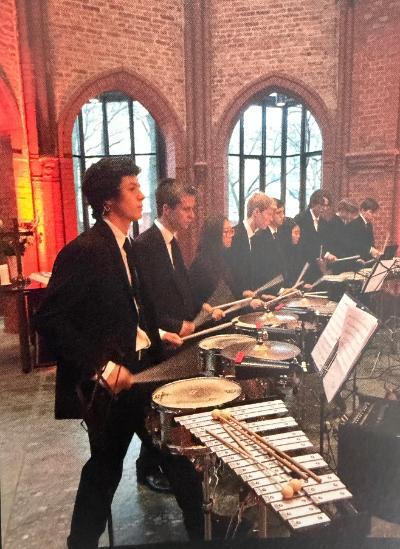
Gill during his early years as a drummer
That curiosity followed him west when he left Texas to pursue his undergraduate studies in Los Angeles. There, mentors who understood his passion for music encouraged him to pursue law not as a departure from music, but as a lens to engage the industry in a more meaningful way — particularly as he became more attuned to the inequities shaping it.
Gill ultimately discovered Loyola Law School as the place where that unique intersection — between music, law, and industry-level change — could take shape.
Once in law school, his perspective continued to evolve. In classes like torts and copyright, Gill began noticing legal questions embedded in everyday experiences, especially at live events. Issues of liability, intellectual property, and contracts surfaced everywhere.
Law school, Gill realized, didn’t pull him away from music; rather, it sharpened how he understood the industry he had long been part of.
“I’ve learned that there are puzzle pieces underneath everything — that there’s a legal framework behind daily life,” he says. “Law can connect to any career, in any industry.”
Maintaining Rhythm
Even amid the demands of his first year of law school, Gill attended 21 live performances — from intimate club shows to a two-day music festival. Far from pulling him away from his studies, the ritual of live music gave him greater clarity and perspective when he returned to the classroom.
“I love the creative expression and the human, unifying aspect of music — everyone moving to the same thing,” Gill says. “It gets me out of my head. The music takes over, and I can shut off work mode and just be present.”
At Loyola, that balance has been reinforced, where Gill has found both institutional support and a deep alumni network within entertainment and live events. More than any other law school in Los Angeles, Loyola’s reach into the entertainment industry has offered meaningful opportunities for mentorship, connection, and professional growth, according to Gill’s experience.
He has been proactive in building those relationships — meeting regularly with attorneys, engaging through student organizations, and seeking guidance from alumni who once stood in his place.
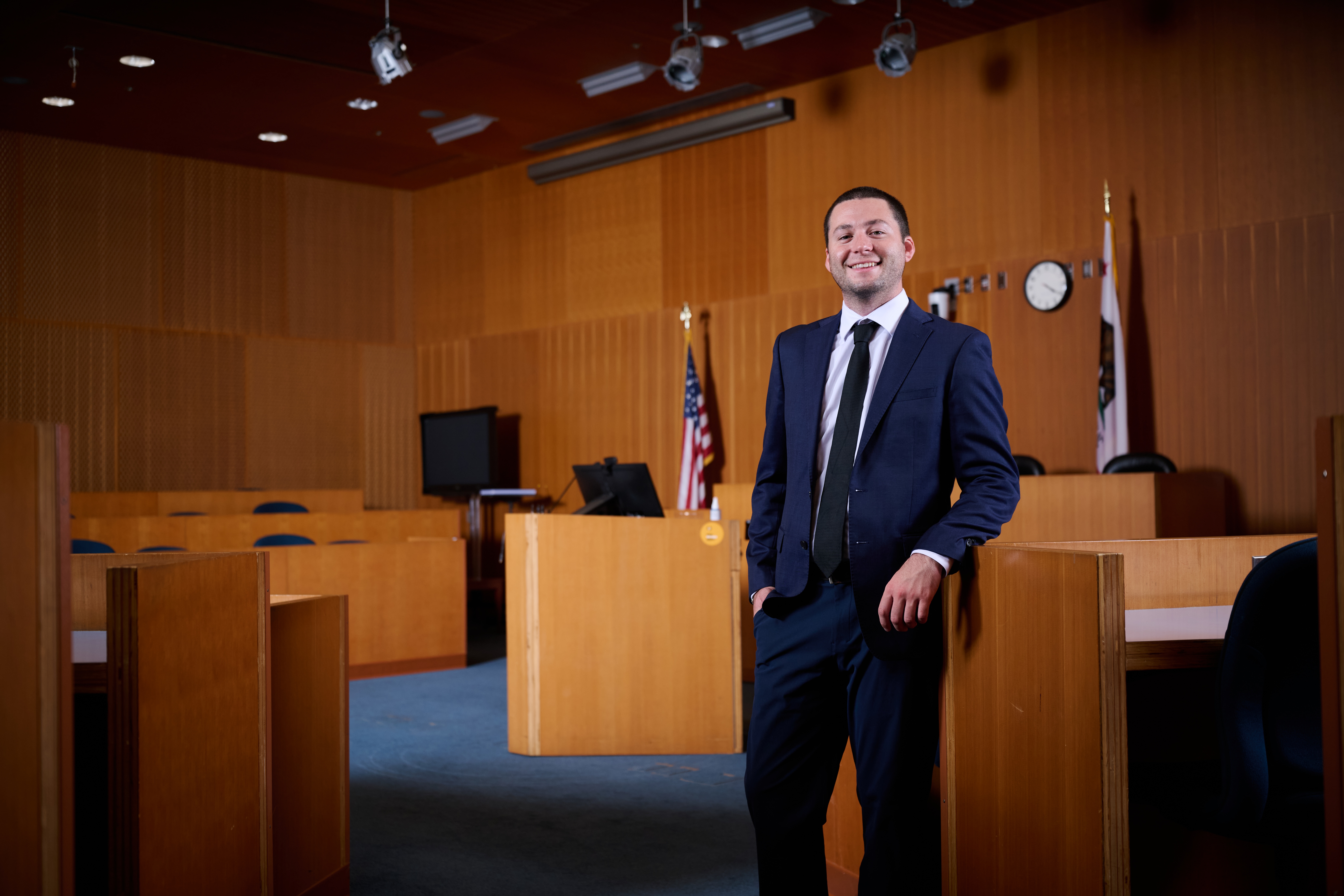
Where Law Meets Live Events
Now a rising second-year student, Gill is serving as a legal intern with Insomniac Holdings, the parent company behind some of the world’s largest live music events. In the role, he engages with the contractual and operational framework that underpins large-scale festivals — a tangible convergence of his legal education and the live-event world he has long been part of.
As he looks ahead, Gill remains motivated by curiosity rather than certainty. What continues to drive him is the opportunity to understand the music industry at its most granular level and to help shape it more equitably from within.
For Gill, the dream of being a rock star hasn’t faded; it’s simply taken on a different shape. Through law, he has found a new stage and a career path that allows him to stay connected to music not just as an art form, but as an industry.
In this chapter, Gill is focused on strengthening the industry while striving to grow within it, in rhythm with what comes next.