Building Survivor-Centered Outreach in Syria
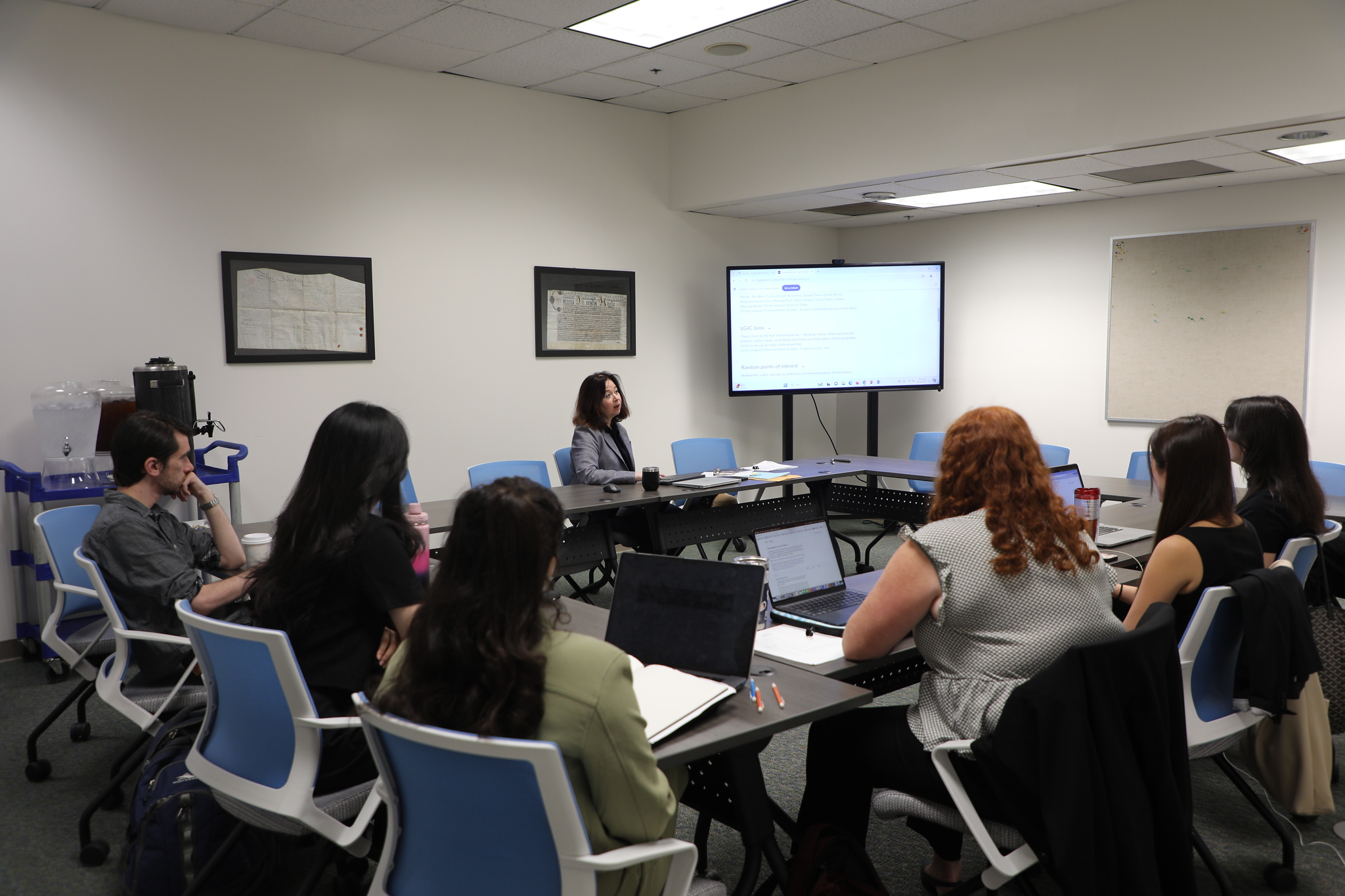
Just before 6 a.m. on a Thursday morning in late October, Loyola Justice for Atrocities Clinic (LJAC) students in Los Angeles logged onto Zoom for what was anything but an ordinary meeting.
After months of preparation, they were hosting their first live discussion with victims and survivors of Syria’s former Assad regime, whose decades of repression and civil war left lasting scars across the country.
The meeting marked a significant step in LJAC’s partnership with the Global Accountability Network (GAN), a U.S.-based nonprofit dedicated to securing justice for victims of atrocity crimes worldwide, and its founder, David Crane. Drawing on Crane’s experience as Chief Prosecutor of the Special Court for Sierra Leone — where he developed a widely regarded outreach program to complement criminal prosecutions — LJAC students are now helping to build a transitional justice outreach framework for Syria.
Working alongside Crane and other experienced practitioners and scholars, a dedicated team of LJAC students is contributing to the development of an initiative that seeks to acknowledge suffering, promote healing and support accountability within the Syrian context. The long-term goal is to establish a sustainable template for a Syrian Outreach Program — one capable of addressing the profound needs of victims and survivors of the country’s recent civil war.
For many students, the October meeting transformed months of research and preparation into a lived reality.
“We are so used to working in theory,” one LJAC student reflected. “Even though we knew this project has real-world significance, it’s different hearing from the people directly affected. It brings life into what we’re working on.”
In the days leading up to the meeting — held just days after Zoom became newly accessible in Syria — students spent long hours preparing thoughtful questions designed to guide the discussion with care. For many, this was their first exposure to international law as it is practiced every day — not in courtrooms or diplomatic chambers, but in conversations grounded in professionalism, shaped by lived experience and centered on the people most directly impacted by harm.
The students understood that trust could not be assumed. It had to be earned — as did the willingness of survivors to speak openly about loss, displacement and profound harm.
“Even though they were on the other side of the planet and we were connected over Zoom on a suboptimal internet connection, the heaviness and weight of their loss — as well as the strength of their resolve — was fully transmitted,” another student shared. “We now have heard first-hand from Syrians who have suffered, what they care about and what they want to see from their country and the rest of the world in order to help Syria move forward.”
The exchange — even across an imperfect internet connection — was deeply human. It was a reminder that work in this domain is about more than doctrine or legal strategy. It is about people who have endured profound harm. In that moment, the role of a lawyer-in-training was not to argue or advise, but to listen.
“The meeting was both informative and visceral,” a third student stated. “Hearing directly from survivors provided me a human-level connection to what I had previously only encountered through reports, news, and online research. It reminded me that listening with patience and humility is central to any victim-centered approach.”
The experience reflects the core of LJAC’s model: hands-on engagement in active cases involving genocide and mass atrocities, paired with a commitment to survivor-centered advocacy. Students confront complex legal questions — and the human realities that give them meaning.
In doing so, they are not only studying international law; they are helping ensure it responds to the people it is meant to serve.
Learn more about the work of the Loyola Justice for Atrocities Clinic (LJAC).