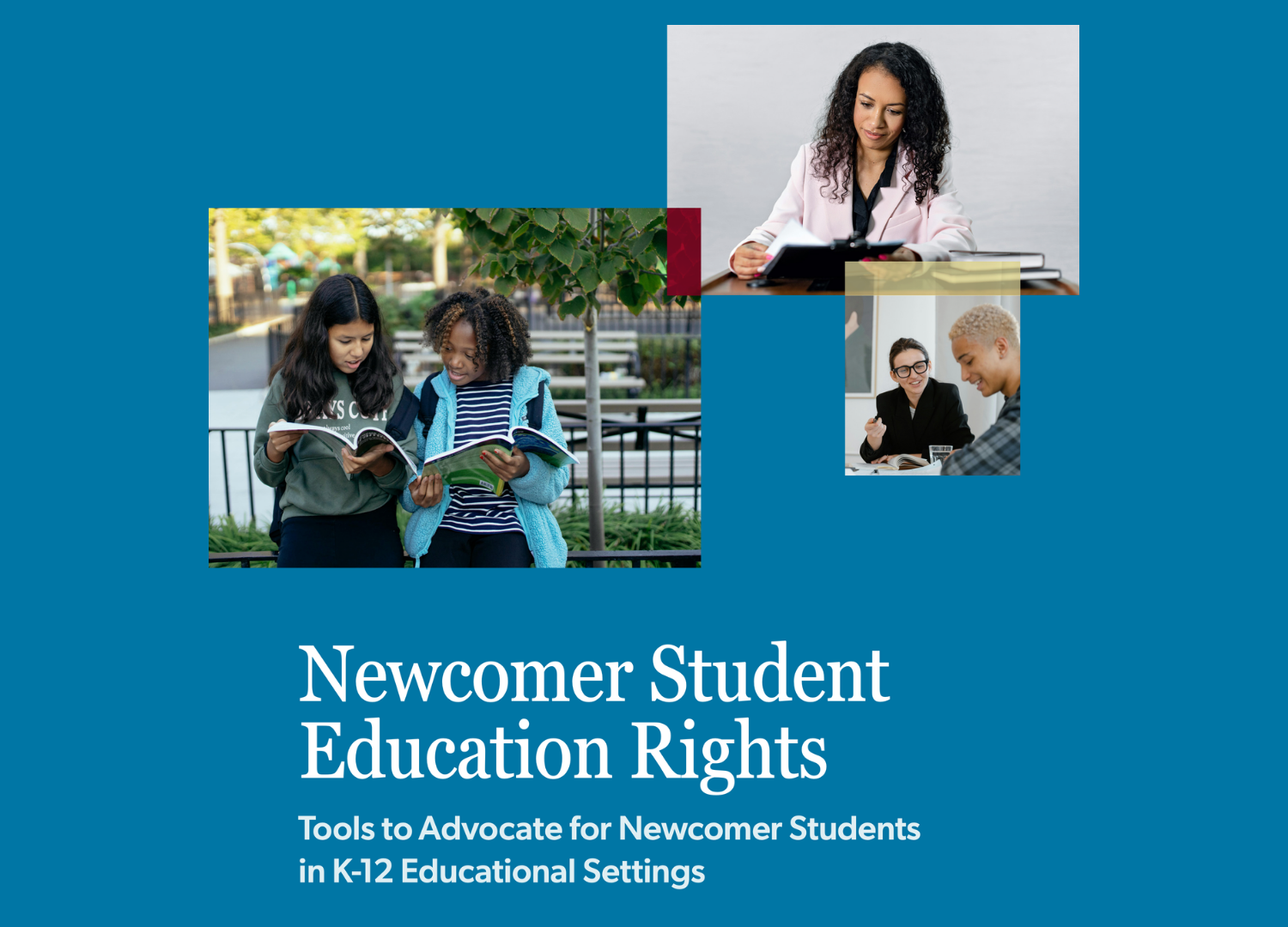
For many newcomer students — immigrant youth who are new to the U.S. and often navigating unfamiliar school systems — school is more than a place to learn. It is often their first point of stability, safety, and possibility. But too often, that access is met with barriers: confusion around enrollment, language access challenges, missing records, or systems that are not designed with their experiences in mind.
LMU Loyola Law School’s Youth Justice Education Clinic (YJEC), in partnership with Public Counsel, is proud to release a new resource:
This comprehensive toolkit is designed to inform attorneys and non-attorneys alike — including educators, social workers, and community advocates — about the educational rights of newcomer and undocumented immigrant students, how to assert those rights, and what to do when those rights are not upheld.
Grounded in federal protections and California law, the toolkit is both informational and practical. It walks through the educational barriers most commonly faced by newcomer students, such as:
- Enrolling in school without unnecessary or unlawful barriers
- Accessing language support and English learner services
- Securing special education evaluations and accommodations
- Navigating school discipline and protecting due process rights
- Understanding graduation pathways, including reduced credit options
- Addressing bullying and discrimination in school settings
At its core, this resource is about more than legal rights. It is about ensuring that young people are seen, supported, and given a fair opportunity to access the education they are legally entitled to — regardless of immigration status.
The toolkit was informed by the lived experiences of the students and families served by YJEC and Public Counsel, as well as the advocates and service providers working alongside them.
Note: This toolkit is for informational purposes only. It is not legal advice and does not create an attorney-client relationship. This manual should not replace an individualized legal assessment of a case.