From Gang-Involved to Expert Witness: Loyola Expands Courtroom Voices
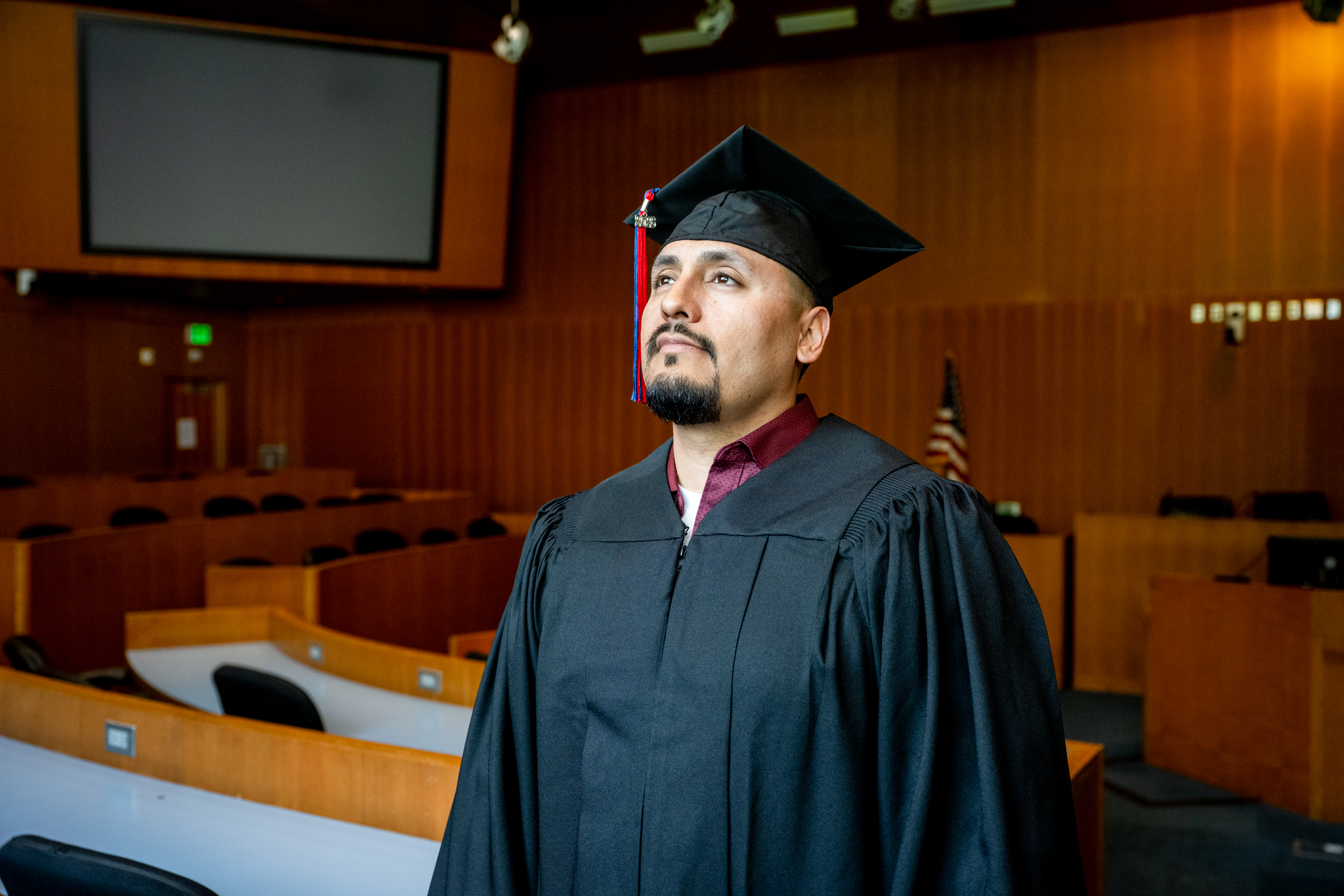
Thirteen formerly incarcerated Angelenos crossed a graduation stage at LMU Loyola Law School this March — many for the first time.
Earlier in the year, they entered the Independent Forensic Gang Expert College (IFGEC), a Loyola program that certifies formerly gang-involved individuals to serve as expert witnesses, challenging traditional narratives around gang involvement in the courtroom.
Over the course of three months, participants attended intensive Saturday sessions on Loyola’s campus, training in California gang law, rules of evidence, and courtroom procedure. At the heart of the program is Loyola’s Center for Juvenile Law & Policy (CJLP), where faculty and clinic students work closely with gang expert trainees as mentors throughout the experience. The program culminated in live moot court testimony — a final demonstration of participants’ readiness to step into the courtroom as experts.
Now surrounded by loved ones, mentors, and faculty, the graduates marked more than the completion of a program. The ceremony reflected a profound milestone: a transformation from individuals once defined by the legal system into experts now prepared to help redefine it.
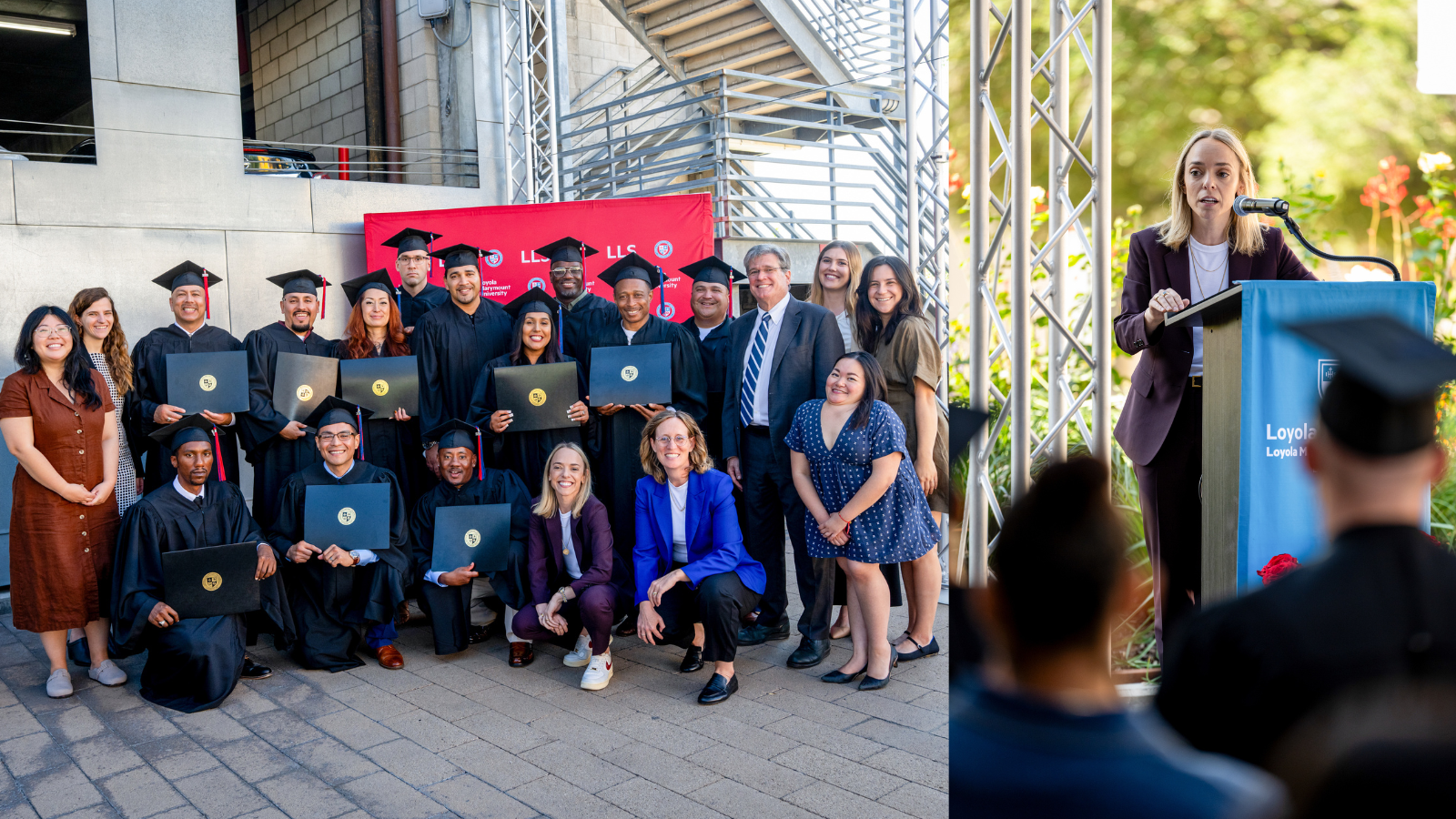
A Graduation Marking Transformation
The ceremony was filled with reflection, gratitude, and hope as graduates stepped forward, one by one, to share their stories. Taken together, their words traced a collective journey — shaped by environment, hardship, and ultimately, transformation.
“There’s a saying that you’re born in it, not sworn in it,” said Alton Pitre. “Many of us are just products of our environment. I grew up in an area called ‘the jungles’ and despite my grandmother’s unconditional love — gang culture was right outside the door.”
For many, the path into the legal system began long before any single decision — shaped more by environment and circumstance than by choice. “Crimes people are alleged to have committed are only just part of the story,” said Dominique Tanks. “They’re really only a symptom of what has happened and transpired in their life.”
Others spoke to the long and difficult process of change. Jon Cesario, who was sentenced to 18 years in prison as a teenager, reflected: “Going through the system was a rollercoaster, I was down, kept going down,” he said. “I had a shovel and I kept burying myself for many years. And then one day, I finally traded in the shovel for a ladder.”
“I had a shovel and I kept burying myself for many years. And then one day, I finally traded in the shovel for a ladder.” - Jon Cesario, Gang Expert
For James “Blue” Marks II, the moment carried a deeper recognition — not just of personal growth, but of being seen by those who made it possible.
“Those labeled in society as what I call the ‘throwaways,’ the ‘undesirables,’ the ‘nothings,’ the ‘they will never amount to anythings.’ It means a great deal to me to know, feel, and see people like yourself who believe in people like me,” he said, addressing the Loyola faculty who lead the program. Together, their reflections point to something larger: a shift not only in individual lives, but in how those lives are understood.
.png)
Creating New Voices in the Courtroom
Through mentorship, classroom instruction, and simulated courtroom hearings, Loyola faculty and clinic students help prepare trainees to step into a legal system where law enforcement has long dominated gang testimony. The program instead advances a different kind of authority — one grounded in lived experience.
Professor Marisa F. Harris noted that “the loudest voices in the courtroom when it comes to gang experts are police officers,” underscoring the limited presence of defense experts. “What we need are people with actual lived experience — people who can shed light on what it’s like to join a gang, to leave, to rehabilitate, and to change your life.”
Addressing the graduates, she remarked: “What we’re building here is bigger than any one case. It’s shifting how the system understands and treats the most misunderstood and mistreated."
Looking proudly over the graduates and the loved ones surrounding them, she closed with a reminder that their connection to Loyola would not end with the ceremony: “You are now part of the Loyola family — for life.”
“What we're building here is bigger than any one case. It's shifting how the system understands and treats the most misunderstood and mistreated.” - Professor Marisa Harris
For Professor Sean Kennedy, executive director of the Center for Juvenile Law & Policy, the program reflects that broader mission. Throughout the college, Kennedy, Harris, clinic faculty, and Loyola students work closely with trainees as mentors, educators, and help lead the simulated hearings designed to prepare graduates for real courtroom testimony.
“This college is a game changer,” Kennedy said. “We take people who were convicted of serious crimes, who made their way out — often through extraordinary rehabilitation — and now they’re bringing their life experience into the courtroom.”
He described the program as part of a larger effort to move beyond individual cases and address the underlying drivers of gang involvement — work that, he said, helps people transition into lives where they can thrive. After years of incarceration, many graduates return determined to create change. “They come out optimistic and on fire to help others,” he said. “As a teacher, it makes me think: this is why I teach.”
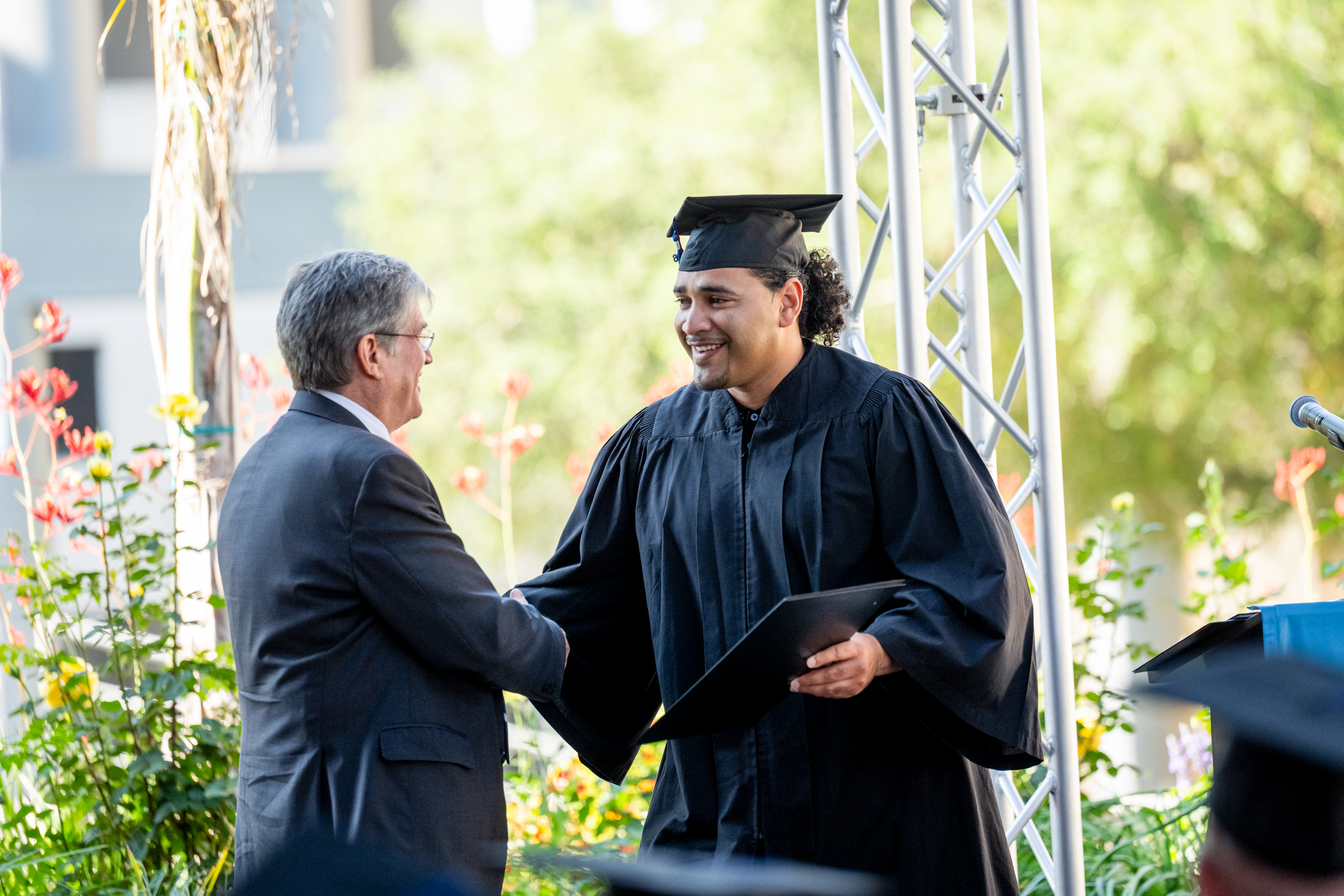
A Different Future — and a Different System
As the ceremony came to a close, the significance of the moment extended beyond the graduates and their families. These newly certified experts now step into courtrooms not as defendants, but as voices shaped by lived experience — contributing to a legal system still evolving in how it defines credibility and expertise.
At its core, the work is a reminder that no life can be defined by a single chapter — and that the possibility for change does not end where the system often draws its lines.
As graduate Brett May reflected, “Life has taught me not to put periods at the end of anyone’s sentence — any punctuation for that matter. Our story isn’t written until we put down the pen.”
“Our story isn't written until we put down the pen.” - Brett May, Gang Expert
Learn more about the work of Loyola’s Center for Juvenile Law & Policy.