CIVIL REMEDIES
|
|

ADDRESSING WAGE THEFT AND LABOR TRAFFICKING THROUGH CIVIL SOLUTIONS, NOT CRIMINAL PENALTIES
The Problem
Wage theft costs workers billions of dollars a year, and many are turning to criminal prosecution as a solution. But twenty years of anti-trafficking prosecutions show that criminal enforcement produces few cases and little restitution. It also harms communities of color and immigrant workers.
Our Goal
SJI is urging California policymakers, advocates, and agencies to fund civil wage enforcement and worker-led solutions instead of prosecution.
The Impact
Civil enforcement recovered more than $3 billion in stolen wages for workers from 2017 to 2020. By putting resources there, SJI is helping make sure workers get their wages back without further harm to their communities.
RESEARCH AND PUBLICATIONS
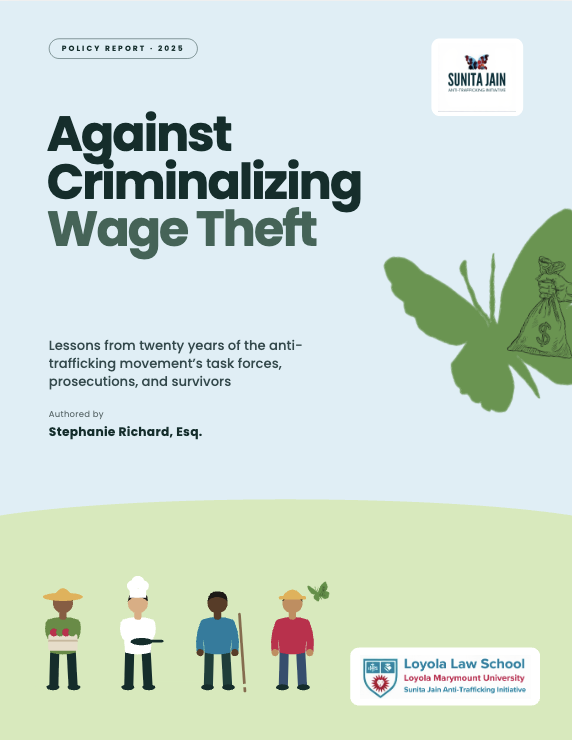
AGAINST CRIMINALIZING WAGE THEFT
Criminalizing wage theft is a popular idea. However, twenty years of experience with human trafficking cases and data show that criminalizing wage theft is likely not only to be ineffective but also to cause further harm to the victims and vulnerable communities who suffer the most from it. Workers’ rights groups, legislators, and prosecutors should therefore reconsider embracing criminalization as a response to this form of abuse.

Against Criminalizing Wage Theft: Lessons from the Antitrafficking Movement
By Stephanie Richard
Drawing on 20 years of anti-trafficking work, SJI Director Stephanie Richard makes the case against criminalizing wage theft, warning of its harmful impact on vulnerable communities. She urges workers’ rights advocates to reject law enforcement-based responses and instead invest in better-funded civil enforcement and community-led models of accountability that more effectively protect workers and prevent abuse.
FOLLOW US
Stay connected by following us on social media, where we share updates on our advocacy, highlight survivor-centered initiatives, and post opportunities to get involved.
