RESTORATIVE JUSTICE
 |
A NEW PATH TO JUSTICE
The Problem
For many survivors of human trafficking, justice cannot be found in traditional criminal legal systems that have historically ignored, retraumatized, or criminalized them. Prosecutorial approaches often prioritize punishment over healing and frequently fail to reflect survivor needs, choices, or safety. As a result, survivors may be excluded from decision-making, silenced in the process, or harmed further by systems meant to provide accountability.
While Restorative Justice has been used in some domestic violence and sexual assault contexts, survivors of human trafficking have rarely been offered it as an option. The absence of survivor-centered alternatives leaves many without meaningful pathways to accountability, healing, or closure, reinforcing systems that prioritize control and punishment over care and consent.
Our Goal
Our goal is to advance a Restorative Justice Pilot Program for human trafficking cases that offers survivors a voluntary, trauma-informed alternative to the traditional criminal legal system. Through our advocacy, we seek to ensure survivors have access to a justice pathway that prioritizes safety, agency, healing, and accountability, while preventing further harm.
This first-of-its-kind pilot would give survivors the choice to participate in a restorative process when appropriate and desired, grounded in strong safeguards, survivor leadership, and community-based support.
The Impact
Restorative Justice offers survivors the opportunity to be heard, believed, and respected through processes such as truth telling, accountability dialogues, and community-supported healing. In cases where RJ has been used, survivors have reported reductions in PTSD, anxiety, and other trauma-related symptoms, demonstrating its potential as a powerful tool for recovery.
By shifting the focus from punishment to accountability and repair, restorative justice can:
-
Reduce re-traumatization within legal systems
-
Center survivor-defined notions of justice
-
Promote meaningful accountability for harm
-
Address the broader conditions that allow exploitation to occur
When implemented thoughtfully and with survivor consent, RJ can complement existing systems and expand access to justice that is rooted in dignity, care, and transformation.
EXPLORE THE ISSUE
Explore key documents and resources that provide additional context for the Restorative Justice Pilot Program and the survivor-led vision behind it. These materials offer deeper insight into how restorative justice can serve as an alternative to punitive responses and why survivor-centered, community-based approaches matter in human trafficking cases. Because the use of restorative justice in trafficking cases can raise concerns about survivor safety and accountability, the resources below also examine the safeguards, survivor choice, and accountability measures necessary to ensure restorative justice processes do not cause further harm.
| Funding Proposal | Restorative Justice Pilot Program - Budget Proposal |
| Survivor Perspective | Restorative Justice for Human Trafficking Survivors |
| Law Review Article | A Restorative Justice Alternative for Trafficking Survivors: The Need for a Collaborative Approach in Establishing a Pilot Program Addressing Survivor-Articulated Needs |
| Position Paper | Ending Human Trafficking Demands Divesting from the Carceral Approach - An FNUSA Position Paper |
| Sign-On Letter of Support | Service Providers, Survivors |
| Media & Events | Restorative Justice Conference |
| Foundational Readings |
Until We Reckon: Violence, Mass Incarceration, and Road to Repair Beyond Survival: Strategies and Stories from the Transformative Justice Movement |
LOCAL ADVOCACY

Shaping Policy Through Lived Experience
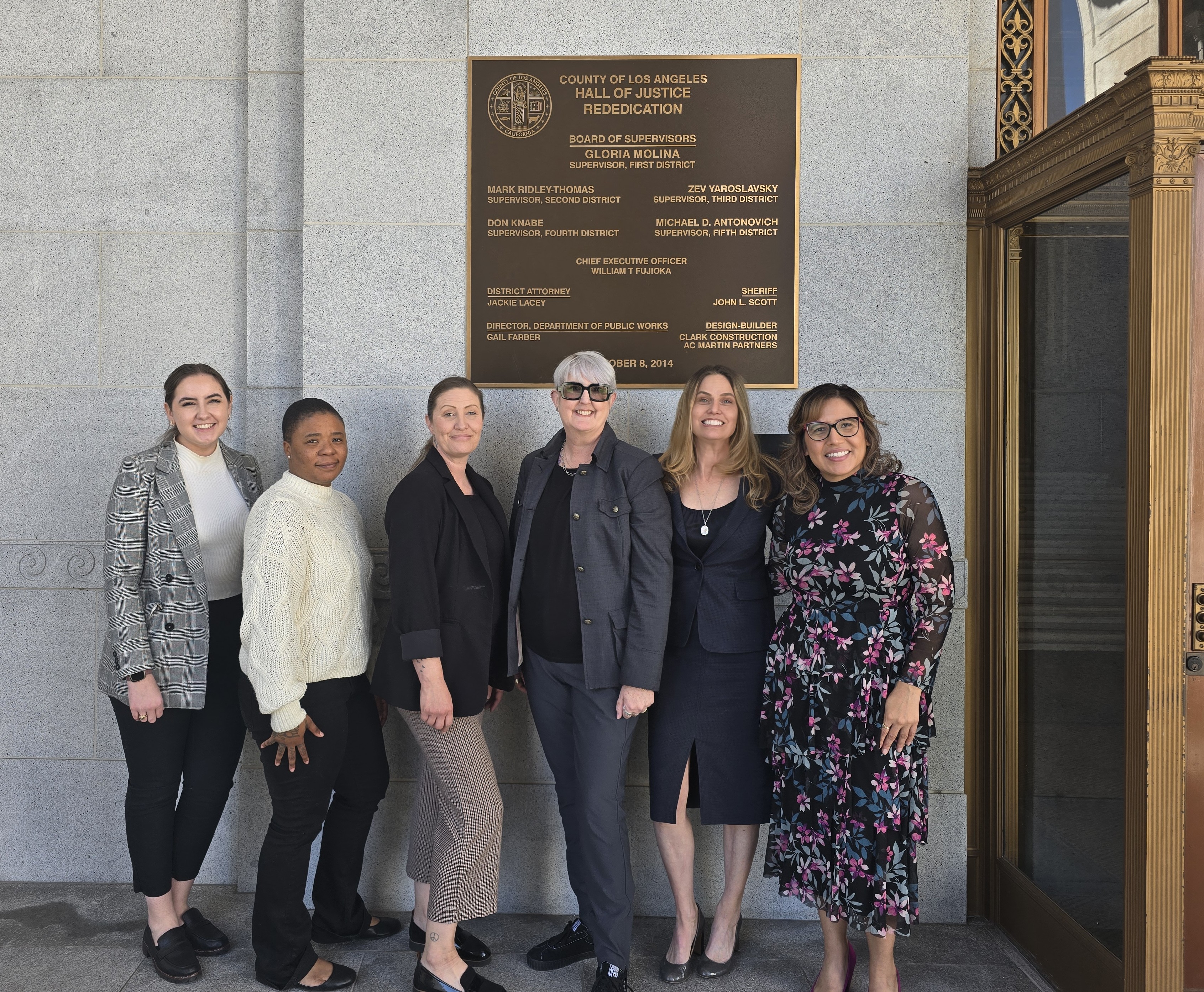
To advance understanding and support for restorative justice in human trafficking cases, SJI has engaged in sustained local advocacy with key institutions, including the Los Angeles County District Attorney’s Office and the Los Angeles Police Department. These conversations intentionally centered survivor leadership, recognizing that lived-experience experts hold critical insights into the shortcomings of traditional systems.
Through facilitated dialogue between survivors and decision-makers, we aim to influence policy and practice by elevating survivor voices and promoting justice models that prioritize healing, accountability, and agency. While these conversations were not easy, they helped introduce a new framework for understanding justice and encouraged continued learning and reflection.
Watch Video
Restorative Justice Conference: A Two-Day Gathering to Reimagine Justice Together
Because we strive for survivor-informed and equity-based policies, in July 2024, we gathered a group of survivor leaders at Loyola Law School for a two-day Restorative Justice conference, developed and facilitated by our team in collaboration with lived-experience experts. Together, we explored whether and how restorative justice could be applied to human trafficking cases. The insights shared helped shape the final budget and proposal for a RJ Pilot Program, ensuring that survivor voices remain at the center of this work.
To learn more about the Restorative Justice conference and explore ways you can host your own event, visit our event page. There, you'll find resources, materials, and guidance to help you create survivor-centered spaces for dialogue, healing, and change.
Restorative Justice Conference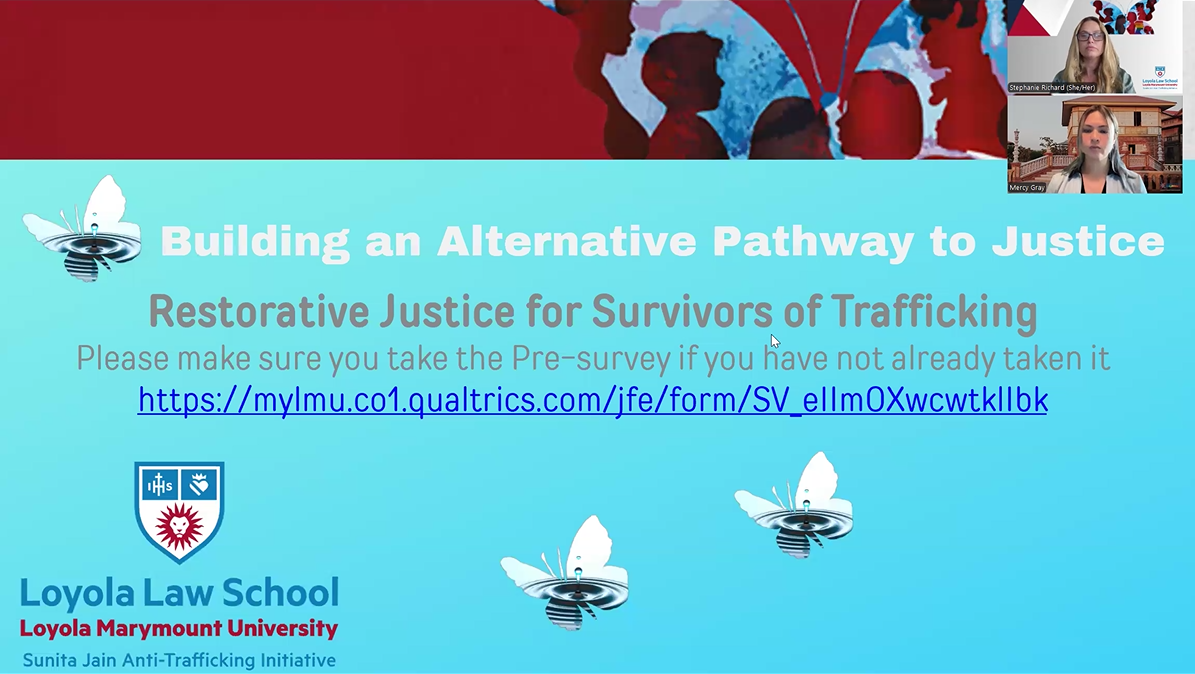
Webinar: Alternative Pathway to Justice
Presented by SJI Director Stephanie Richard and Lived-Experience Expert Mercy Gray, this training addressed how traditional prosecution often fails to meet the needs of trafficking survivors, who frequently face re-traumatization and lack meaningful support. Restorative Justice (RJ) offers a survivor-centered alternative that prioritizes agency, demands accountability, and addresses the root causes of trafficking.
This session explored how prosecutors can use their discretion to pursue RJ approaches that provide real relief and lasting outcomes for survivors—moving beyond punitive models toward true justice.
Watch TrainingTAKE ACTION
Help Us Champion Alternatives That Work for Survivors
We invite service providers and survivors to show their support for the Restorative Justice Pilot Program for human trafficking. Your voice plays an essential role in advancing a model that centers healing, accountability, and survivor agency. Join us in calling for alternatives to the traditional criminal legal system that truly meet the needs of survivors.
Support RJ Pilot ProgramFOLLOW US
Stay connected by following us on social media, where we share updates on our advocacy, highlight survivor-centered initiatives, and post opportunities to get involved.