FORCED CRIMINALITY
 |
ADDRESSING THE NEEDS OF YOUTH
The Problem
Youth trafficking is often understood primarily through the lens of commercial sexual exploitation, and while this remains a critical concern, it is not the only way young people are trafficked. Youth may also be trafficked for labor in homes, businesses, or other workplaces and are frequently not identified as victims. Even less recognized are youth who are forced or coerced to commit crimes as a form of labor trafficking, a practice known as forced criminality.
In these situations, traffickers exploit young people through threats, violence, debt, or manipulation, compelling them to engage in illegal acts such as drug sales, theft, or fraud for the trafficker’s benefit. Because these youth are often encountered through law enforcement or the juvenile justice system, their exploitation is frequently overlooked and they are treated as offenders rather than survivors. Failing to recognize forced criminality as a form of labor trafficking prevents youth from accessing protection, services, and trauma-informed care, and instead exposes them to punishment for harm they did not choose.
Our Goal
Our goal is to ensure that all trafficked youth, including those coerced into criminal activity, are recognized, protected, and supported as survivors of exploitation. Through local and state advocacy, we seek to expand existing systems so that youth trafficked through forced criminality receive the same protections, identification, and access to services as youth who are commercially sexually exploited.
The Impact
Recognizing forced criminality as a form of labor trafficking would shift how systems respond to youth who have been exploited. Rather than being criminalized, these young people would be identified earlier, connected to trauma-informed services, and supported through coordinated systems of care. Expanding protections would reduce harm, improve long-term outcomes for trafficked youth, and ensure that responses are grounded in accountability for traffickers rather than punishment of survivors.

EXPLORE THE ISSUE
LOCAL ADVOCACY
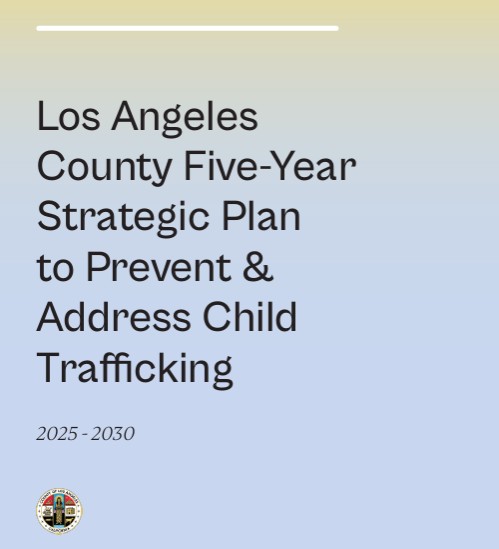
Ensuring Equal Protections for All Trafficked Youth in Los Angeles County
SJI is working with LA County to strengthen how local systems identify and support youth who experience labor trafficking, including youth coerced into criminal activity. We contributed to the development of the LA County Five-Year Strategic Plan to Prevent and Address Child Trafficking, 2025–2030, helping ensure that labor trafficking and forced criminality are included in the County’s broader response to child trafficking.
SJI also participates in the County’s child trafficking leadership team and its committees as the Strategic Plan moves into implementation. Through this ongoing involvement, we continue to advocate for training, screening, referral pathways, services, and coordinated responses that recognize youth trafficked through forced criminality as survivors rather than offenders.
LA County has developed a strong framework for supporting Commercially Sexually Exploited Children, including specialized training, safe housing, youth-centered diversion, and coordinated cross-agency partnerships. SJI is advocating for this infrastructure to be expanded so that all labor-trafficked youth receive the same level of identification, protection, and trauma-informed support.
Read Strategic Plan
Building the Capacity of Community-Based Organizations
SJI provided training to 8 of 12 community-based organizations funded by the Los Angeles County Department of Youth Development (DYD) on how to identify and respond to child labor trafficking, including forced criminality. Pre- and post-training surveys measured participants’ knowledge, experiences, and ability to recognize warning signs, report possible cases, and connect youth to services and benefits.
The pre-survey findings showed that providers may already be working with labor-trafficked youth without identifying them as victims. The results also highlighted the need for clearer organizational procedures, better tracking systems, and additional training on forced criminality and available survivor benefits.
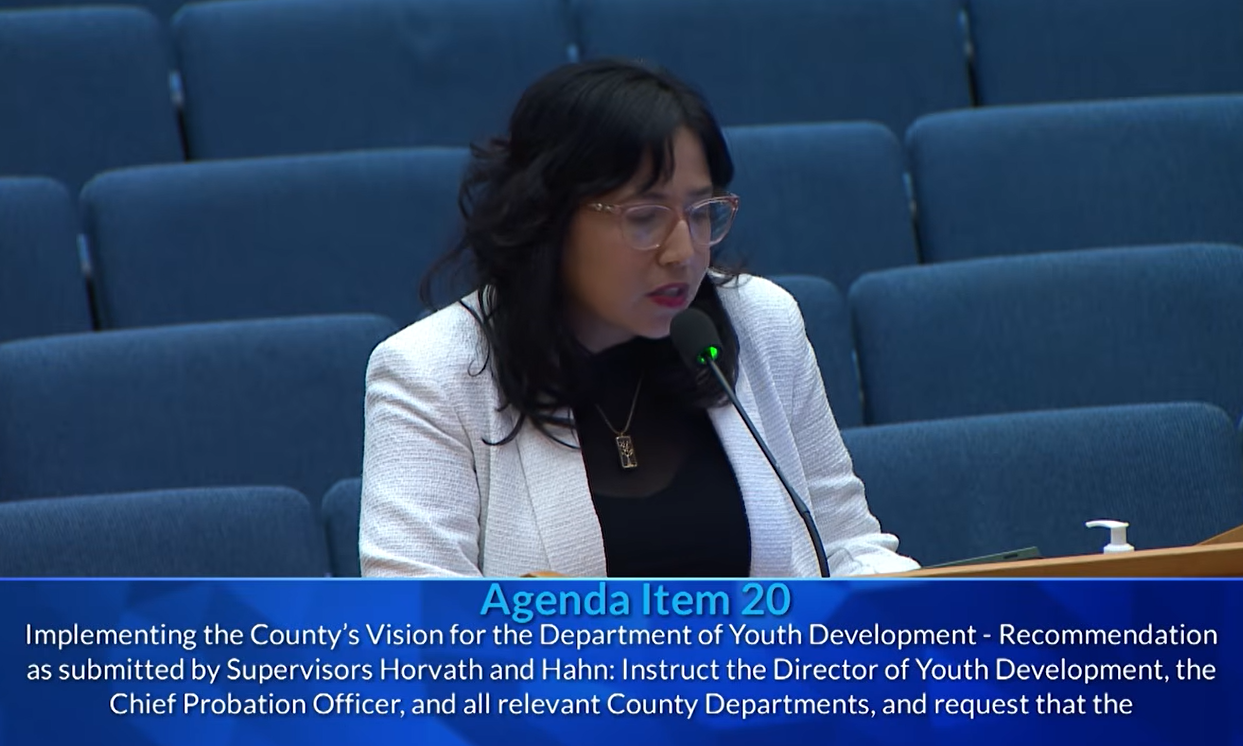
Using Training Findings to Inform County Policy
SJI also submitted written feedback and recommendations to LA County based on our work with community-based organizations funded by the Department of Youth Development. The letter highlighted lessons from the trainings and participant surveys, including gaps in identifying child labor trafficking and forced criminality, reporting possible cases, tracking youth who may have been trafficked, and connecting them to services and benefits.
Through this work, SJI recommended clearer guidance, stronger referral pathways, improved organizational procedures, and continued training for youth-serving providers. The recommendations support our broader advocacy to ensure that youth trafficked through forced criminality are recognized as survivors and receive appropriate protections and services rather than being punished for their exploitation.
STATE ADVOCACY

Strengthening the Child Welfare Response to Labor Trafficking
Just as LA County is working to ensure youth trafficked by forced criminality are recognized and supported, statewide change is also needed to close the gaps that leave many labor-trafficked children invisible. Across California, reports of child labor trafficking are rising, yet the child welfare system still recognizes only sex trafficking as a form of child abuse. As a result, youth who are labor trafficked—including those coerced into criminal activity—are rarely screened or identified as victims, resulting in missed opportunities to connect them with safety and care.
SJI is supporting statewide legislation that would update California’s definition of child abuse to include labor trafficking. This change would extend the same protections currently afforded to commercially sexually exploited children (CSEC) to all trafficked youth, ensuring they are identified early, connected to trauma-informed services, and no longer overlooked within the systems meant to keep them safe. Strengthening state policy is essential to ensuring that every trafficked child—regardless of how they were exploited—receives the support and recognition they deserve.
RESEARCH AND TRAINING
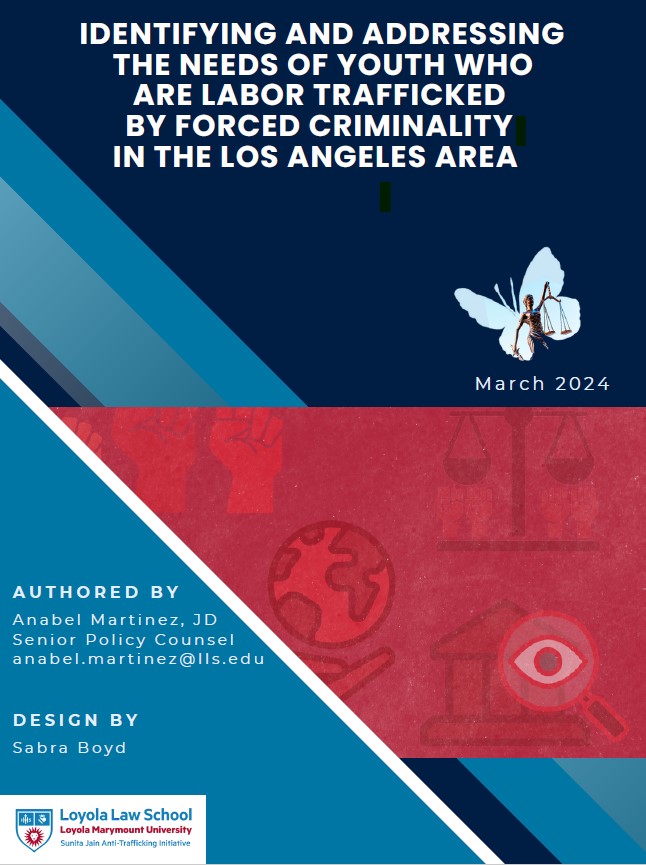
Identifying and Addressing the Needs of Youth Who are Labor Trafficked By Forced Criminality
SJI developed a Policy Report and accompanying Fact Sheet to highlight how the child welfare system and other County and City agencies can do more to address the needs of labor-trafficked youth—especially those coerced into criminal activities. In addition to highlighting service gaps, the report aims to raise awareness among policymakers, service providers, and community members about the hidden nature of forced criminality and the urgent need for trauma-informed, youth-centered interventions.
Read Report
Human Trafficking by Forced Criminality and Its Intersection with the Child Welfare System
This training introduces forced criminality as a form of labor trafficking, highlights key warning signs and screening strategies, and shares trauma-informed approaches for identifying and supporting youth impacted by this exploitation. It is designed for frontline professionals—including educators, law enforcement, social workers, attorneys, and service providers—who may encounter trafficked youth in their work.
Watch Training
Youth at Risk: The Impact of Labor Trafficking by Forced Criminality
Hear from Lived-Experienced Experts
On July 10, 2025, SJI hosted an insightful panel discussion on labor trafficking by Forced Criminality (LTFC) and its impact on youth. Panelist explored the complex intersections of homelessness, gang involvement and LTFC, shedding light on how these vulnerable groups are targeted and exploited. Attendees heard powerful testimonies from individuals with lived experiences, offering a firsthand perspective on the challenges and realities faced by youth who are labor trafficked by forced criminality. The discussion also covered potential solutions and actionable steps that can be taken to address and mitigate the impact of LTFC on youth. You can view our recording by following the link below.
Watch VideoPARTNER RESOURCES
| Resource | Type | Description |
|---|---|---|
| Forced Criminality | eLearning | Introductory training on forced criminality as a form of labor trafficking. |
| Identifying Forced Criminality: Aisha’s Story | Case Study | Explores how forced criminality can appear in a young person’s experience. |
| Internalized Perceptions of Forced Criminality in Gangs | Survivor Soundbite | Discusses how young people may understand or normalize exploitation connected to gangs. |
| Gangs Using Children as Scapegoats | Survivor Soundbite | Highlights how children may be used to take responsibility for criminal activity. |
| Sofia’s Story: Identifying Child Labor Trafficking | Case Study | Demonstrates indicators of child labor trafficking and opportunities for identification. |
| Child Labor vs. Child Labor Exploitation vs. Child Labor Trafficking | Resource Tool | Helps distinguish child labor, labor exploitation, and labor trafficking. |
| Trafficking, Incarceration, & Survival: How the Criminal Legal System Harms Victims | Recorded Training | Examines the intersection of trafficking, criminalization, and incarceration. |
FOLLOW US
Stay connected by following us on social media, where we share updates on our advocacy, highlight survivor-centered initiatives, and post opportunities to get involved.
